
Google’s Core Updates can dramatically impact website rankings, traffic, and visibility. If your website lost impressions, clicks, or keyword rankings after the 21 May 2026 Core Update, you’re not alone.
Many website owners immediately assume they have been penalized. However, in most cases, a Core Update is not a penalty. Instead, Google’s algorithms have reassessed content quality and determined that other pages better satisfy user intent.
The good news is that recovery is possible.
In this guide, you’ll learn exactly how to identify the cause of ranking drops, improve affected pages, strengthen your website’s authority, and position your content for future Google updates.
Understanding What a Core Update Actually Does
Before making changes, it’s important to understand what happened.
Google Core Updates are designed to improve search quality. During these updates, Google reassesses millions of webpages and adjusts rankings based on factors such as:
- Content quality
- Search intent satisfaction
- Expertise and authority
- User experience
- Trustworthiness
- Freshness of information
Imagine Google reviewing your content alongside your competitors and asking:
“Which page would help users the most?”
If another page provides more complete, accurate, trustworthy, or useful information, Google may rank that page above yours.
This means recovery is usually achieved through improvement, not shortcuts.
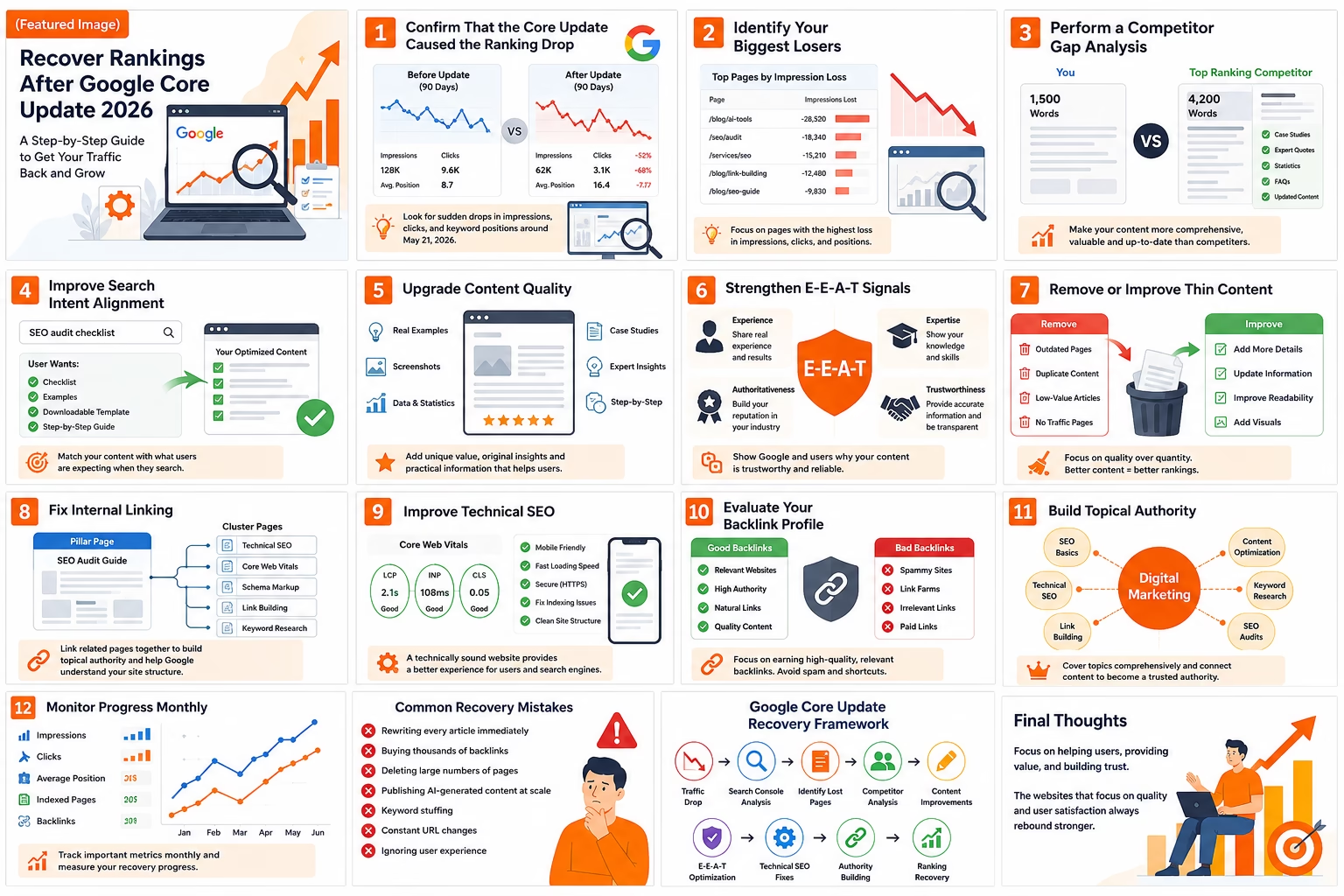
Step 1: Confirm That the Core Update Caused the Ranking Drop
Many website owners start changing content without confirming the actual cause.
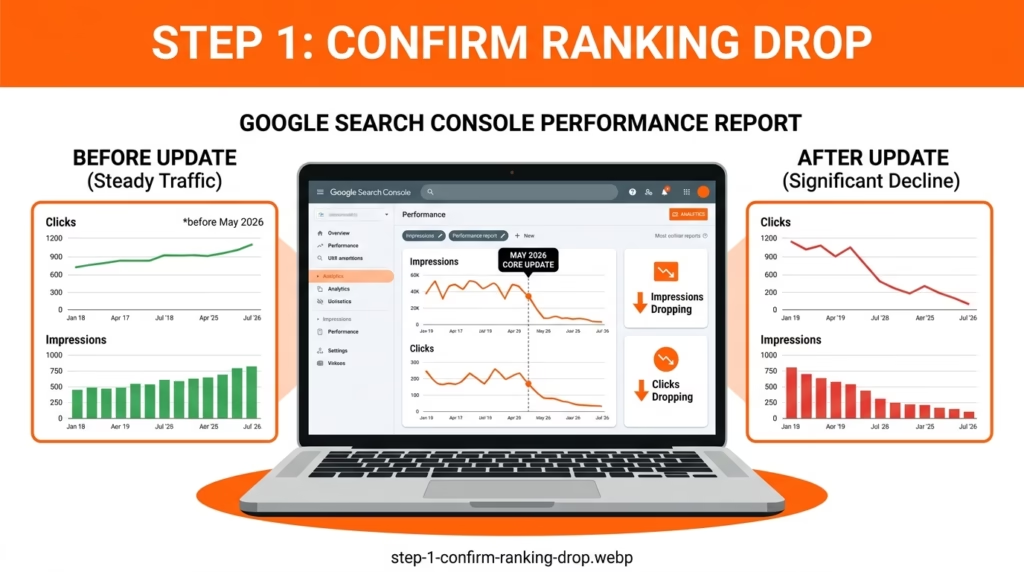
First, log in to Google Search Console.
Navigate to:
Performance → Search Results
Compare:
- 90 days before the update
- 90 days after the update
Look for:
- Sudden drops in impressions
- Significant click reductions
- Keyword position declines
Questions to ask:
- Did traffic decline on all pages?
- Did only certain sections of the website drop?
- Did rankings decrease on specific keyword groups?
If the decline started around May 21, 2026, and no major website changes were made, the Core Update is likely responsible.
How to Solve
Create a spreadsheet with:
- URL
- Previous traffic
- Current traffic
- Ranking keywords
- Ranking change
This becomes your recovery roadmap.
Step 2: Identify Your Biggest Losers
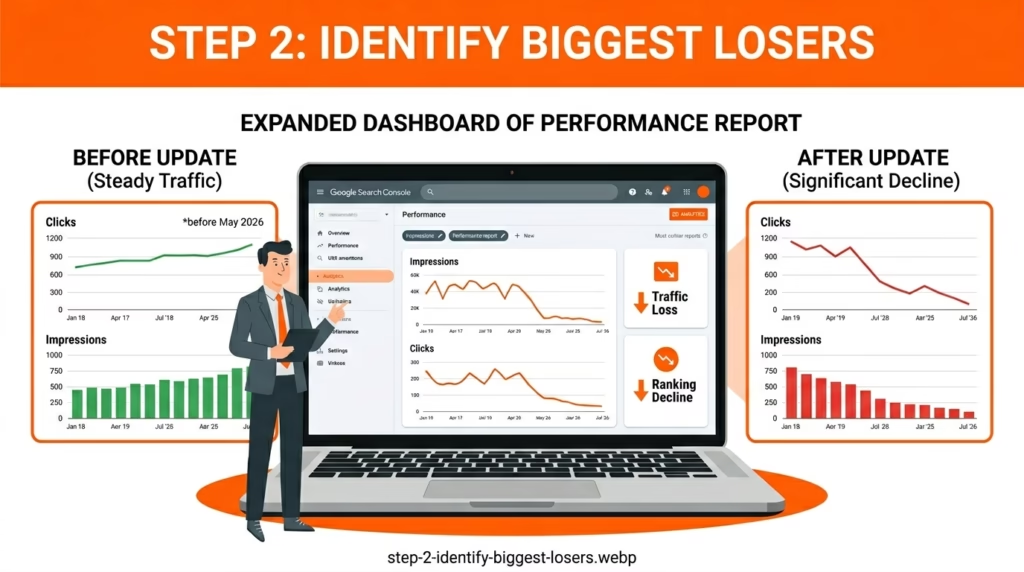
Not every page requires improvement.
Focus on pages that lost the most visibility.
In Google Search Console:
Pages → Compare Date Ranges
Sort by:
- Impression loss
- Click loss
- Position loss
You may discover patterns such as:
- All AI-related articles dropped
- Service pages declined
- Product pages lost visibility
These patterns often reveal what Google believes is weak on your website.
How to Solve
Prioritize pages based on:
- Revenue impact
- Traffic impact
- Keyword potential
Fix high-value pages first.
Step 3: Perform a Competitor Gap Analysis
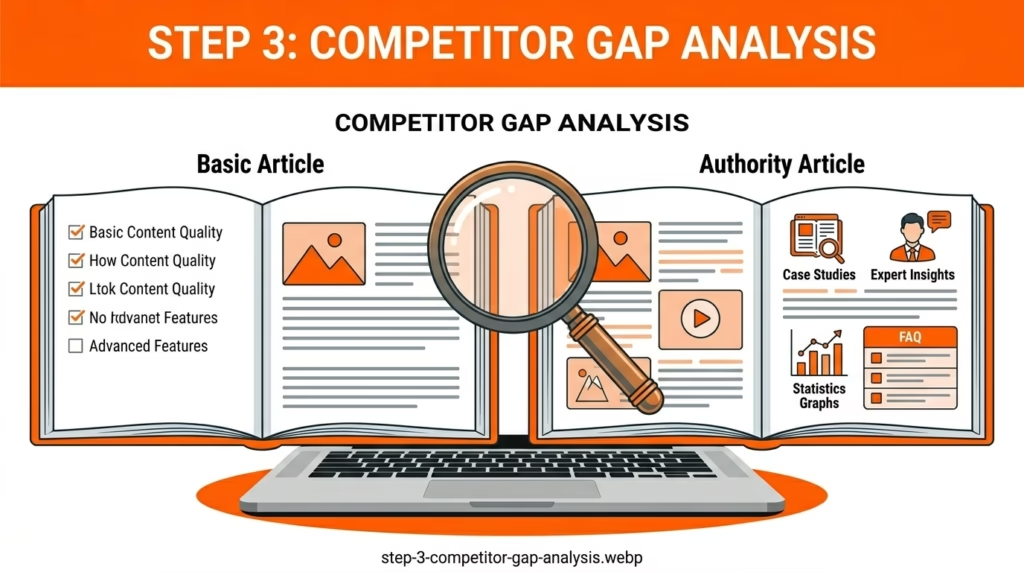
This is where most recoveries happen.
Search your target keyword.
Open the top five ranking pages.
Compare them against your page.
Evaluate:
Content Depth
Do competitors cover topics you ignored?
Example:
Your article:
- 1,500 words
Competitor:
- 4,000 words
- Case studies
- Expert quotes
- Statistics
- FAQs
Google may view their content as more comprehensive.
Content Freshness
Are competitor pages updated recently?
Users prefer current information.
User Experience
Compare:
- Design
- Readability
- Navigation
- Visual content
How to Solve
Create a content gap list.
Add missing sections one by one.
Never copy competitors.
Instead, create something more useful.
Step 4: Improve Search Intent Alignment
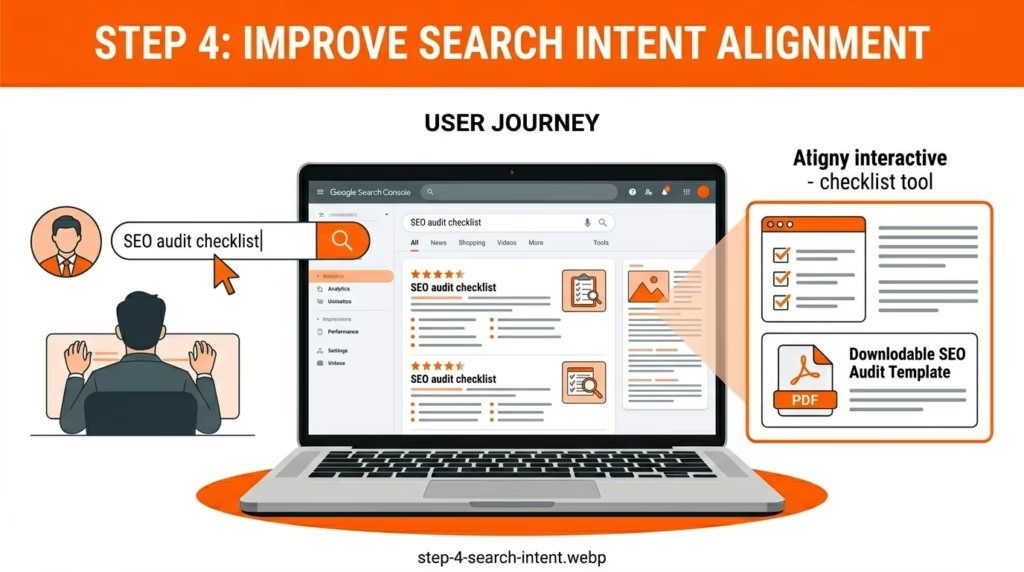
One of the biggest reasons pages lose rankings is intent mismatch.
For example:
Keyword:
“SEO audit checklist”
User wants:
- Checklist
- Examples
- Downloadable template
If your article only explains SEO audits without providing a checklist, users may leave.
Google notices this.
How to Solve
Ask:
“What is the user expecting when they search this keyword?”
Review top-ranking pages and identify common elements.
Then improve your page accordingly.
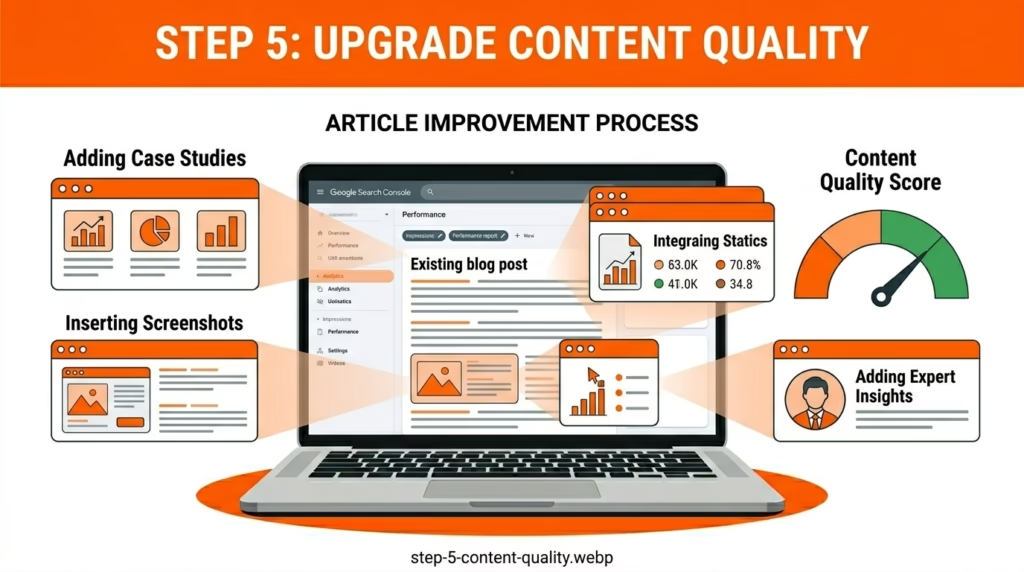
Step 5: Upgrade Content Quality
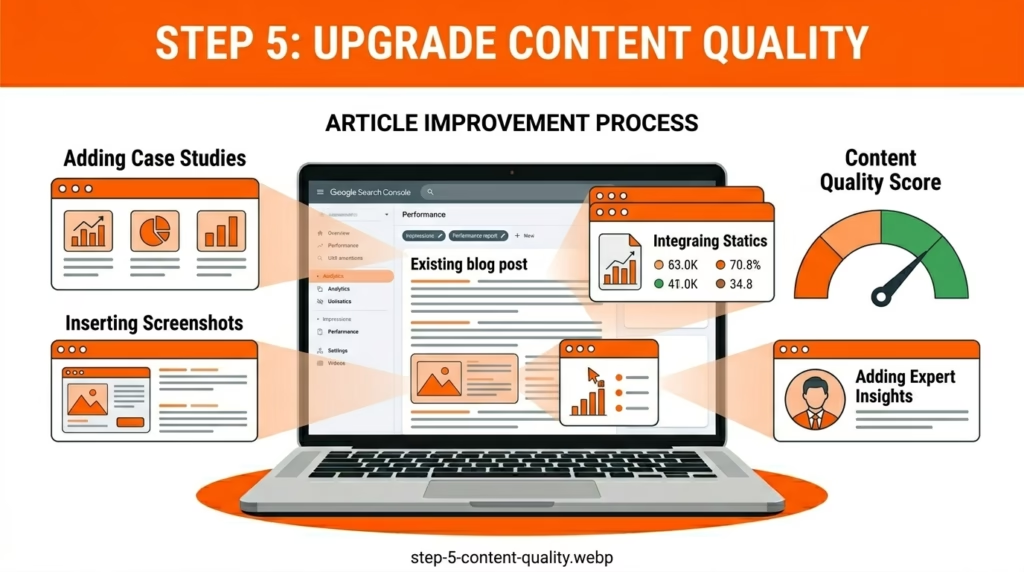
This is often the most important recovery step.
Google increasingly rewards:
- Original insights
- Real experience
- Helpful explanations
- Practical examples
Weak content usually contains:
- Generic advice
- Rewritten information
- AI-generated filler
- No unique value
How to Solve
For every section, add:
- Real examples
- Screenshots
- Data
- Case studies
- Personal experience
- Step-by-step instructions
Ask yourself:
“Would this page still be useful if Google didn’t exist?”
If the answer is yes, you’re moving in the right direction.
Step 6: Strengthen E-E-A-T Signals
Google heavily evaluates:
Experience
Expertise
Authoritativeness
Trustworthiness
Many websites fail here.
How to Solve
Add:
Author Pages
Include:
- Real author name
- Experience
- Industry expertise
- Social profiles
About Page
Explain:
- Who you are
- What your company does
- Why readers should trust you
Contact Information
Include:
- Contact form
- Business information
Case Studies
Show real results whenever possible.
Google wants evidence that content comes from people with genuine experience.
Step 7: Remove or Improve Thin Content
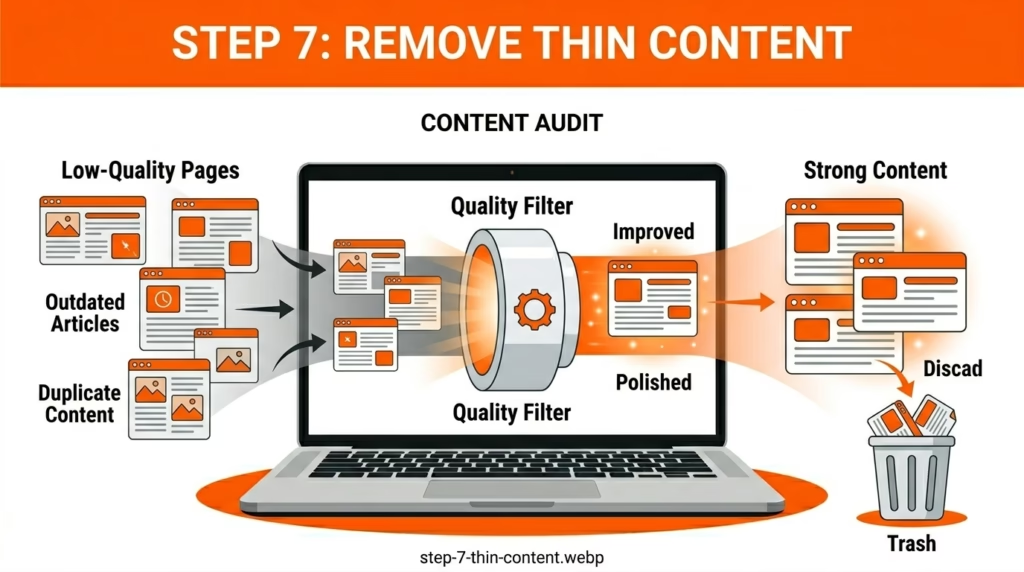
Thousands of websites publish hundreds of weak articles.
Google increasingly ignores low-value pages.
Examples:
- 300-word articles
- Duplicate content
- Outdated guides
- Pages with no traffic
How to Solve
Perform a content audit.
For every page:
Keep:
- High quality
- Relevant
- Updated
Improve:
- Thin content with potential
Remove:
- Outdated useless pages
Sometimes fewer pages create stronger rankings.
Step 8: Fix Internal Linking
Internal links help Google understand your website structure.
Many websites ignore this.
Example:
You publish:
- SEO Audit Guide
- Technical SEO Guide
- Link Building Guide
But never connect them.
Google struggles to understand topical relationships.
How to Solve
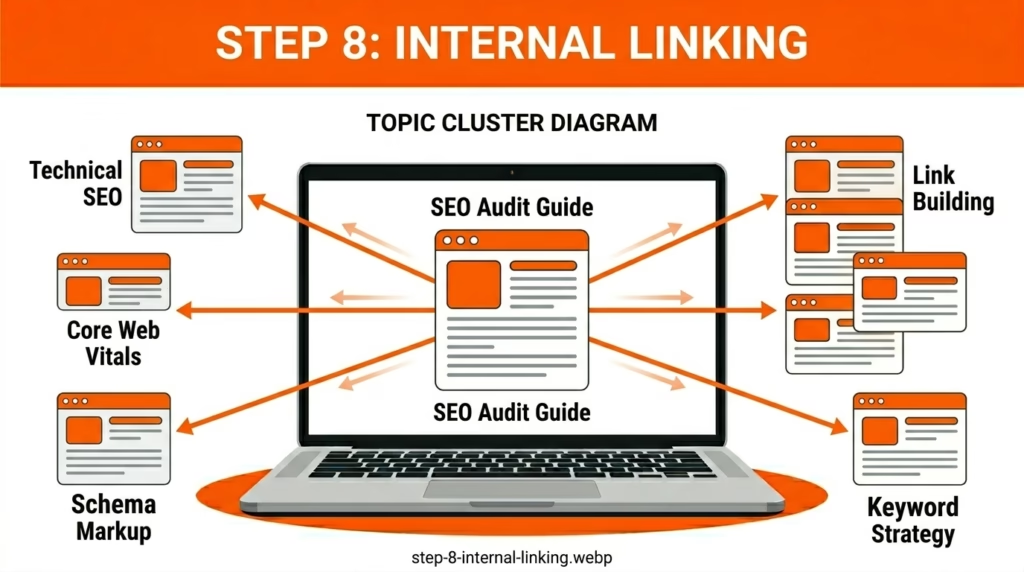
Create topic clusters.
Link related pages naturally.
Example:
SEO Audit Guide
↓
Technical SEO
↓
Core Web Vitals
↓
Schema Markup
This builds topical authority.
Step 9: Improve Technical SEO
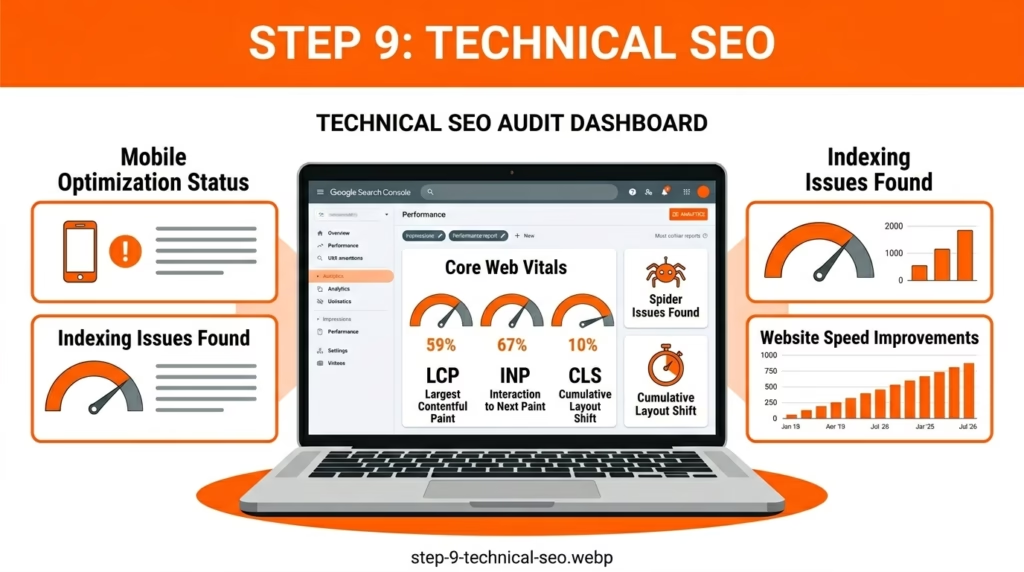
A technically poor website struggles to compete.
Check:
Core Web Vitals
Focus on:
- Largest Contentful Paint (LCP)
- Interaction to Next Paint (INP)
- Cumulative Layout Shift (CLS)
Mobile Experience
Most searches happen on mobile devices.
Ensure:
- Responsive design
- Fast loading
- Easy navigation
Indexing Issues
Check:
Google Search Console → Pages
Look for:
- Crawled but not indexed
- Duplicate pages
- Redirect errors
How to Solve
Fix technical problems before expecting ranking improvements.
Even excellent content can struggle on a poorly optimized website.
Step 10: Evaluate Your Backlink Profile
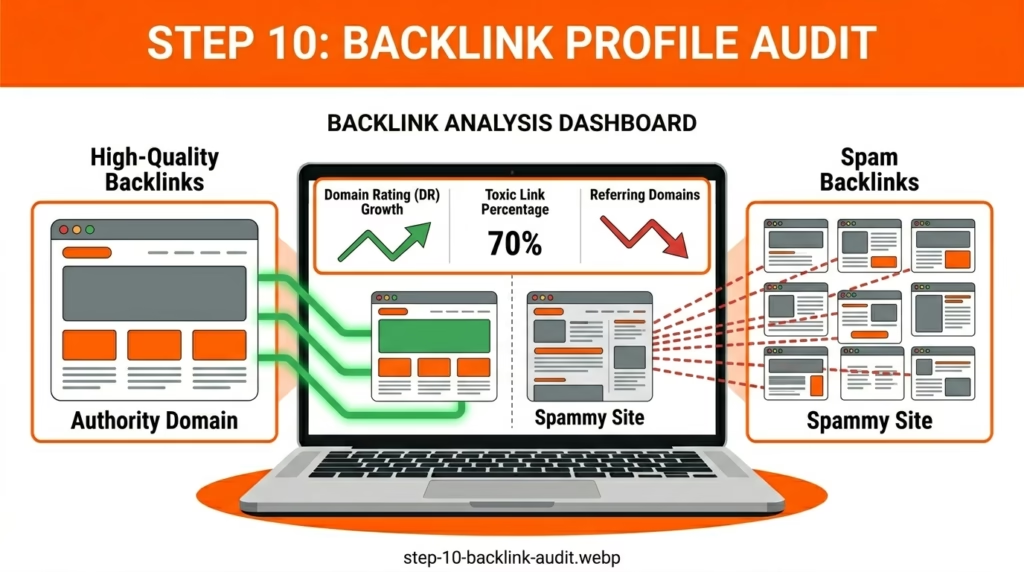
Backlinks still matter.
However, quality matters more than quantity.
Many websites lose rankings because competitors have stronger authority.
How to Solve
Analyze:
- Referring domains
- Link relevance
- Link quality
Avoid:
- Spam directories
- Automated backlinks
- PBNs
- Link farms
Focus on earning links through:
- Guest posting
- Digital PR
- Industry mentions
- Original research
Step 11: Build Topical Authority
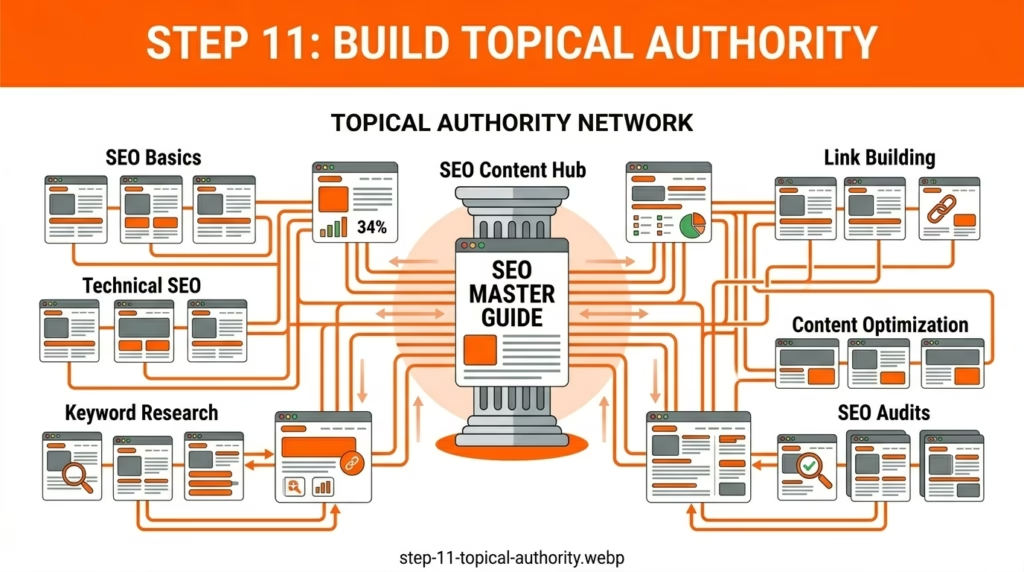
Google increasingly rewards websites that cover entire topics.
Example:
Instead of publishing random articles:
Publish:
- SEO Basics
- Technical SEO
- Link Building
- Keyword Research
- Content Optimization
- SEO Audits
Connect them together.
Google begins viewing your website as a trusted resource.
How to Solve
Create content clusters around your core services and expertise.
For CNVRTool, topics might include:
- SEO
- Link Building
- Website Design
- Digital Marketing
- AI Tools
Cover each topic comprehensively.
Step 12: Monitor Progress Monthly
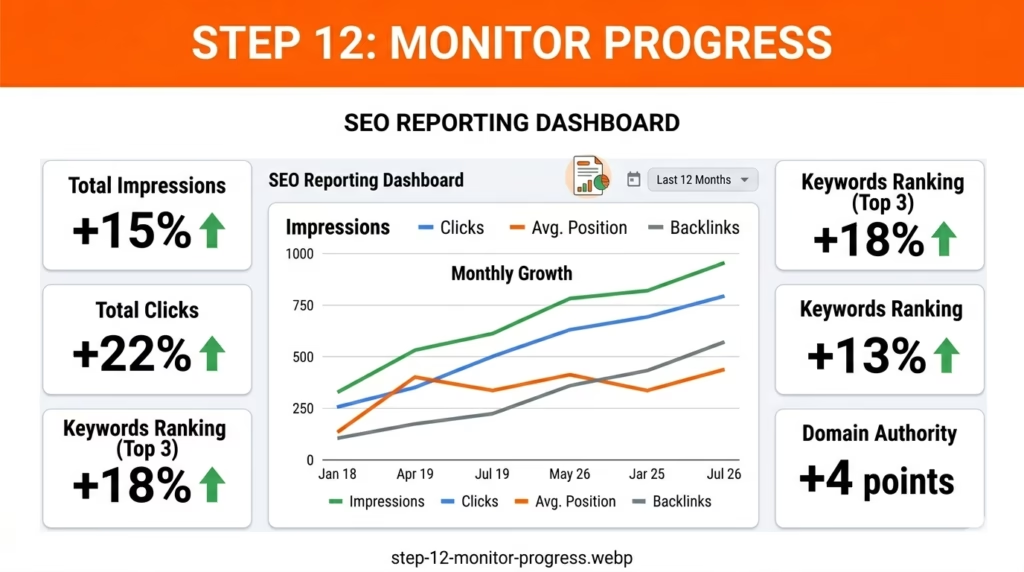
Recovery takes time.
Many websites improve rankings months after making changes.
Track:
- Impressions
- Clicks
- Rankings
- Indexed pages
- Backlinks
Create monthly reports.
Document improvements and results.
Common Recovery Mistakes
Avoid these mistakes:
❌ Rewriting every article immediately
❌ Buying thousands of backlinks
❌ Deleting large numbers of pages
❌ Publishing AI-generated content at scale
❌ Keyword stuffing
❌ Constant URL changes
❌ Ignoring user experience
Final Thoughts
The websites that recover fastest from Google Core Updates are usually those that focus on helping users rather than chasing algorithms.
Instead of asking:
“How do I trick Google into ranking me again?”
Ask:
“How can I create the most useful, trustworthy, and complete resource on this topic?”
That mindset aligns perfectly with Google’s long-term goals and gives your website the best chance of recovering rankings after the 21 May 2026 Core Update.