
Introduction
People have been playing with hair color for as long as there’s been hair to play with. A new shade can say a lot about a person without a single word. The trouble is that the traditional route takes time, money and a real willingness to live with the result, good or bad. Editing apps have opened up a gentler route. With a hair color filter, anyone can try out a shade on a photo or through a live camera effect and decide whether it actually suits them. It’s a lot easier than explaining a bold mistake at the family dinner table.
Silver has become a firm favorite among people drawn to modern, polished and slightly unconventional looks. Digital tools let them explore the trend from the sofa, long before they book a salon appointment or open a box of permanent dye.
Understanding Silver Hair Color Trends
Silver lives somewhere between natural gray, platinum blonde and outright metallic. Under one light it reads icy and cool, under another soft and smoky, and in bright sun it can practically shine. It works on short crops and long waves, on fine hair and thick curls, and on all sorts of personal styles.
For a long time, silver hair was mostly linked with getting older. Modern fashion has turned that idea on its head. Younger people often pick it for a slightly futuristic edge, while others love its quiet, grown-up elegance. The same color can feel like science fiction on one person and like a tailored coat on another.
Getting there in real life isn’t always easy, especially for anyone starting with dark hair. A professional job may mean bleaching, toning and regular upkeep to keep yellow or brassy tones from sneaking back in. Seeing the look on screen first makes far more sense than finding out halfway through.
How Digital Hair Color Filters Work
Behind every hair filter is image-processing technology that changes how the hair looks while leaving the face alone. Some tools lean on artificial intelligence or facial recognition, others on image segmentation or automatic color adjustments, and many combine several of these at once.
Segmentation is the clever bit. It works out where the hair stops and the skin, clothes and background start. Once the hair is found, the software swaps its color while doing its best to hold on to the natural details: the highlights, the shadows and the individual strands. Get that right and the result looks like hair. Get it wrong and it looks like a painted helmet.
Smarter tools also adjust for lighting and texture. That’s why their results look believable rather than like a flat wash of paint. Even so, how well a tool performs still depends on the quality of the picture, the hairstyle and how busy the background is. A plain wall beats a crowded café every time.
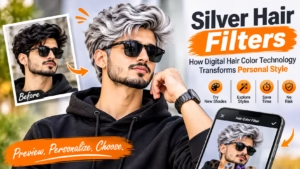
Anyone curious about a new look can try a silver hair filter to see how the shade might look in a digital image. It’s a simple first step towards a decision, with nothing physical changed yet.
Benefits of Previewing Silver Hair Digitally
Exploring Different Styles
There’s more than one kind of silver. Pale platinum, darker charcoal silver, metallic gray and softer ash tones all count. Trying them out digitally lets people compare the options side by side and spot which ones flatter the look they’re after. What seemed perfect on a stranger online doesn’t always work on someone else’s face.
Reducing Uncertainty Before Coloring
A change of hair color can cost a fair bit, both at the salon and in the months of upkeep that follow. A digital preview gives an early sense of what the result might look like. It also makes the conversation with a stylist much easier. Showing a picture beats trying to describe “silver, but not too silver” across a busy salon.
Creating Personalized Content
Creative work benefits as well, from digital portraits and social media photos to bigger projects. Content creators can try out a whole range of visual styles without changing their real hair every other week. One afternoon can produce a dozen looks without a drop of dye.
Saving Time and Resources
Experimenting on screen can cut down on temporary color sprays, wash-out dyes and repeated trial runs. A filter can’t promise a salon result. What it can do is narrow down the options before any money changes hands.
Tips for Getting More Realistic Results
How good a digital hair preview looks depends partly on the photo it starts with. Sharp, well-lit images make it much easier for the software to tell hair apart from everything around it. A blurry picture snapped in a dim corridor rarely gives the filter much to work with.
Soft, even daylight tends to show the hair’s texture and shape more faithfully than harsh lighting with deep shadows. A spot near a window on an overcast morning often works beautifully. Having the hair stand out against a contrasting background can also help the tool pick it out more accurately.
Trying the effect on photos taken from a few different angles is often worthwhile. A straight-on portrait is a good start, but a side view can show how the color behaves across layers, curls or longer lengths.
It’s worth keeping in mind that filters don’t copy every physical quality of dyed hair. Real silver may catch the light in its own way, and how it turns out rests on the starting shade, the hair’s health and the colorist’s method. The screen gives a hint. The salon chair gives the answer.
Limitations and Privacy Considerations
Filters are brilliant for playing with ideas, yet what they show is a rough guide, not a forecast. Flyaways, elaborate styles, grainy images and odd lighting can all trip the software up. A messy bun with a few loose wisps can easily confuse it.
Privacy matters too whenever online image-editing services come into play. Before a selfie goes up, it’s sensible for users to read the privacy policy, learn how pictures get processed and check whether the platform keeps them. Most people would rather know where their face ends up.
Sticking with reputable tools and not sharing sensitive photos more than necessary helps people make better-informed choices about digital editing.
Conclusion
Thanks to image-editing technology, silver hair filters have made trying out a new style far more approachable. Hair detection, color tweaks and visual effects work together, so people can try on new looks while their real hair stays untouched. Nothing changes until they’re ready.
No preview replaces a professional’s advice or promises a particular result. Still, it’s a practical place to start comparing shades, plan a hairstyle and spark a few creative ideas. With the technology getting better every year, on-screen hair experiments look set to play an even bigger part in personal styling and digital content creation. The mirror still has the final word, but the phone now gets the first one.