
You spent six months filming, editing, and packaging your online workout program.
You priced it at $199. Three months after launch, a client forwards you a message from a fitness Facebook group: “Someone has been sharing your entire video library for free.”
This is not a hypothetical. It happens to fitness coaches, yoga instructors, and wellness creators every single week. And the most common reason it happens is not bad luck. It is the platform they chose.
A private YouTube link is not protection. Vimeo Basic does not prevent downloads. Neither of them stops a paying client from screen-recording your content, copying the URL, or forwarding access to five friends. When your workout programs are priced at $99, $199, or more, “private” settings are not the same as “secure” video hosting.
This article covers the best video hosting for fitness trainers who sell premium programs, rated on DRM enforcement, watermarking, mobile delivery, and how cleanly each platform fits into the course setup most coaches already use.
Key Takeaways
- YouTube private links and basic Vimeo plans do not offer real content protection. They can be downloaded, screen-recorded, or shared with no trace.
- Secure video hosting for fitness creators requires three things: DRM encryption, dynamic watermarking, and CDN-backed delivery for fast mobile playback.
- DRM (Digital Rights Management) encrypts the video stream itself so that even a viewer who pays for access cannot copy or redistribute it.
- The three-layer content protection standard for fitness creators requires DRM at the stream level, dynamic watermarking at the viewer level, and CDN-backed delivery at the distribution level. Platforms that cover all three offer meaningful protection; those that cover only one or two do not.
- Most fitness coaches sell through Kajabi, Teachable, or Podia. The best hosting platforms on this list embed cleanly into all three.
- Gumlet covers the full protection stack (DRM, watermarking, tokenized links) with strong mobile delivery. VdoCipher is the strongest DRM-only option. Uscreen is built for coaches who want a branded subscription app.
Why Free Platforms Fall Short for Paid Fitness Content
The problem with using YouTube or a basic Vimeo plan for paid fitness content comes down to what “private” actually means on those platforms.
A private YouTube link means the video is not indexed in search results. It does not mean the video is encrypted. It does not prevent a viewer from opening browser developer tools and pulling the direct file URL.
It does not stop screen recording software, and it definitely does not stop a client from forwarding that link to someone else. Once a link is out of your hands, you have zero control over who watches.
Vimeo’s lower-tier plans add password protection and basic embed controls, but they do not include DRM. DRM, or Digital Rights Management, is an encryption standard built directly into the video stream that prevents unauthorized copying, downloading, or playback outside an authorized environment. Without it, a determined viewer can still extract your video file.
There is also the watermarking gap. When a pirated version of your workout series shows up online, a basic hosting platform gives you no way to trace who leaked it. Dynamic watermarking, which overlays a viewer’s email address or name invisibly onto their video session, solves that. If a recording leaks, you know exactly which account it came from.
Fitness content has a long shelf life and a high resale value. That combination makes it one of the higher-risk categories for video piracy. Choosing the right hosting platform from the start is a lot cheaper than recovering from a leak after the fact.
How to Choose a Secure Video Platform for Your Fitness Coaching Business
Not every platform on the market is built with fitness creators in mind. Before diving into the list, here is a quick summary of the criteria used to evaluate each option, and how all seven stack up at a glance.
The non-negotiables for any fitness coach selling premium content form what’s referred to as the three-layer content protection standard: DRM encryption at the stream level, dynamic watermarking at the viewer level, and CDN-backed mobile delivery at the distribution level.
A platform that covers all three protects your revenue from three distinct threat vectors: unauthorized copying, leak tracing, and access degradation on mobile. Compatibility with the course platforms you already use (Kajabi, Teachable, Podia) is the fourth requirement, but the first three are what separate proper secure hosting from basic access control.
| Platform | DRM | Dynamic Watermarking | CDN / Mobile Delivery | LMS Integration | Starting Price |
| Gumlet | Yes | Yes | Multi-CDN (Fastly + CloudFront) | Yes (iFrame + API) | Free Plan available, base plan starts from $25/month (DRM requires Business plan at $199/month) |
| VdoCipher | Yes | Yes | Yes | Yes | $149/year (annual billing only; DRM included from first paid plan) |
| Uscreen | No (AES) | No | Yes | Built-in storefront | $199/month (Growth); DRM on App Essentials plan at $499/month |
| Vimeo OTT | No (standard plans) | No | Yes | Limited | $1/subscriber/month |
| Wistia | No | No | Yes | Embed-based | Free plan available); paid starts from $99/month |
| Dacast | AES-128 (Scale plan only, $165/mo) | No | Yes | Limited | $39/month |
| SproutVideo | No | Yes (Sprout Plan) | Yes | Embed-based | $10/month |
The 7 Best Video Hosting Platforms for Fitness Trainers
Each platform below is assessed on the same criteria: how well it protects paid content, how it performs on mobile, and how easily it fits into the course setup most fitness coaches already use. Every entry includes an honest limitation, because no single platform is the right fit for every type of creator.
1. Gumlet
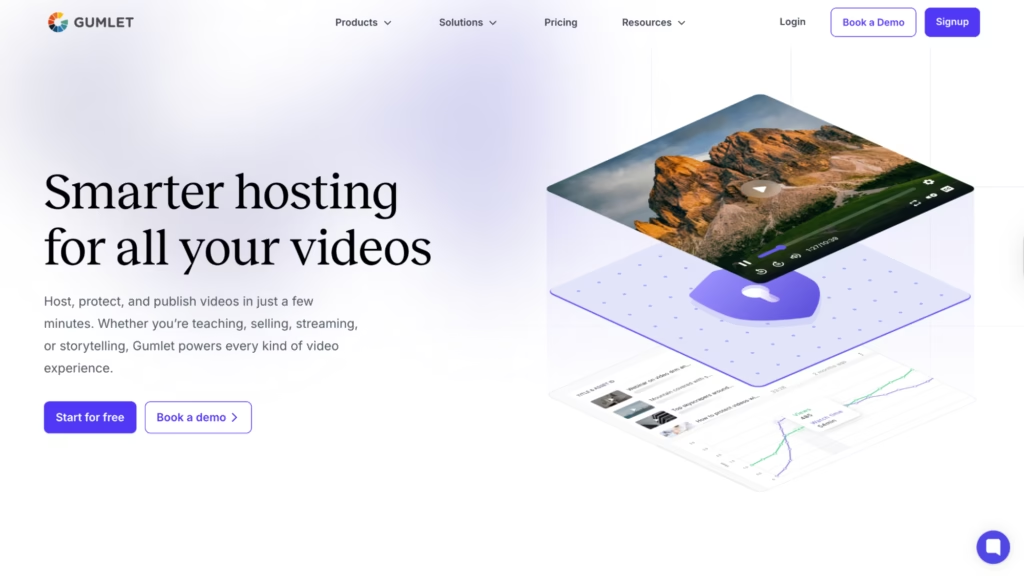
Gumlet is an end-to-end video hosting and protection platform built for content creators and businesses that need to secure, deliver, and analyze video at scale. For fitness trainers selling premium content, its security features are built into the infrastructure rather than layered on as optional add-ons.
DRM is the core reason fitness creators choose Gumlet. It uses Google Widevine and Apple FairPlay encryption, the same standards behind Netflix, meaning a viewer who purchases your workout program cannot download, screen-record, or redistribute it outside your authorized player.
Dynamic watermarking adds a second layer of accountability: each viewer’s email address or user ID is invisibly embedded into their session, so any leaked recording can be traced directly back to the source account.
Delivery runs through a multi-CDN setup using Fastly and CloudFront. Adaptive bitrate streaming adjusts quality in real-time based on connection speed, which matters when most of your clients watch on mobile between gym sessions. Videos embed cleanly via iFrame or API into Kajabi, Teachable, Podia, or a custom membership site, so your existing course setup stays intact with video protection features running underneath it.
Of the seven platforms in this list, Gumlet is the only one that combines full DRM enforcement, dynamic watermarking, and multi-CDN delivery under a single platform, without requiring a separate storefront or subscription management tool.
A free tier lets fitness creators test delivery quality before scaling. Dynamic watermarking and signed URL controls are available from the first paid plan ($25/month). Full DRM encryption via Widevine and FairPlay requires the Business plan ($199/month), which is worth noting for creators whose priority is hard piracy prevention over access control.
Best for:
Fitness coaches selling premium programs who want DRM, dynamic watermarking, tokenized links, and mobile-optimized delivery in one platform.
Worth noting:
Gumlet is infrastructure, not a storefront. Pair it with a course platform if you need subscription billing or a built-in student dashboard.
2. VdoCipher
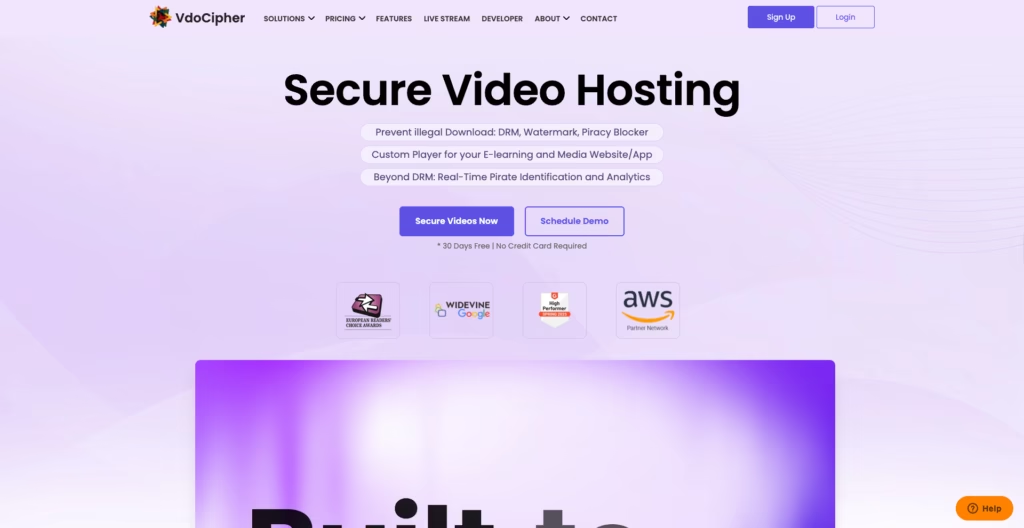
VdoCipher is built for one thing above everything else: making video downloads and screen captures as close to impossible as technically achievable.
It uses Hollywood-grade DRM through Google Widevine and Apple FairPlay, the same encryption stack trusted by major streaming services. For fitness creators who have already experienced piracy or who sell high-priced programs where a single leak causes real financial damage, VdoCipher is a serious option.
The platform includes dynamic watermarking, a custom-branded player, and per-viewer tokenized links that expire after a set period. Embedding works via iFrame or API, so you can drop protected videos into Kajabi or Teachable without rebuilding your course setup.
Screen recording is actively blocked on supported browsers and devices, which is a step above what most platforms offer.
VdoCipher pricing is annual-only. The entry Starter plan starts at $149 per year, with higher-bandwidth tiers available based on storage and streaming volume. Every paid plan includes full DRM and dynamic watermarking from day one, there is no tiered unlock for security features.
Best for:
Yoga and fitness instructors who have experienced video piracy, sell programs priced above $99, or want the maximum technically available protection for their content.
Worth noting:
The dashboard and setup process are more technical than some competitors. The focus is squarely on protection rather than marketing analytics or storefront management.
3. Uscreen
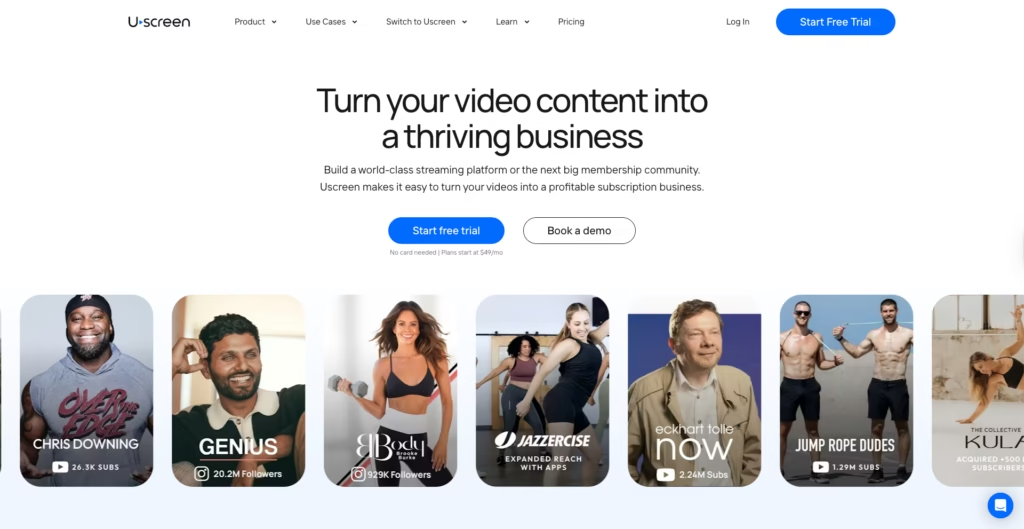
Uscreen is purpose-built for video subscription businesses. Unlike pure video hosting tools, it bundles hosting, storefront management, subscriber billing, and even white-label iOS, Android, and smart TV app creation into one platform.
For a fitness coach who wants clients to open a branded app on their phone and find a complete library of workout content, Uscreen removes the need to stitch together multiple tools.
The platform handles gated content, subscriber management, and video delivery with a clean, non-technical interface. It supports live streaming alongside on-demand content, which is useful for coaches who run scheduled group classes in addition to a prerecorded library.
Uscreen does not use DRM in the traditional sense and does not offer dynamic watermarking. It relies on access control and authenticated sessions rather than stream-level encryption. That is a genuine limitation for creators focused on hard piracy prevention.
Plans start at $199 per month (Growth). DRM is available on the App Essentials plan at $499 per month, which requires a conversation with Uscreen’s sales team to enable.
Best for:
Established fitness brands and coaches who want a branded subscription app and a fully managed subscription business, and for whom piracy prevention is secondary to delivery experience.
Worth noting:
The monthly cost is higher than pure hosting options. It is best suited for coaches with an existing paying audience, not someone just launching their first program.
4. Vimeo OTT
Vimeo is a name almost every fitness creator already knows. Its clean player, polished look, and straightforward upload process have made it a default choice for coaches who want something better than YouTube without a lot of setup.
At higher tiers, Vimeo offers domain-level embed restrictions, password protection, and some audience management tools that make it more capable than the basic plan.
What needs to be said clearly: Vimeo’s standard plans do not include DRM. A viewer watching your workout series through a Vimeo embed can still use browser extensions or screen recording software to capture that content.
The platform is very well-suited for marketing videos, free workout previews, and ungated content where appearance matters more than lockdown-level protection.
Pricing starts at around $1 per subscriber per month for entry-level plans, with more advanced features available for the Enterprise tier. Contact Vimeo for more information.
Best for:
Fitness coaches who use video primarily for marketing, free challenge content, or lead generation, and for whom polished presentation is the top priority.
Worth noting:
If you are actively selling paid programs and have concerns about piracy, Vimeo’s standard plans will not provide the protection you need. The upgrade path to OTT-tier features is more expensive and still lacks true DRM.
5. Wistia
Wistia is designed for businesses that use video as a marketing tool, and it is genuinely excellent at that.
The platform’s viewer analytics are among the best available: you can see exactly where clients drop off in your videos, which sections they replay, and how engagement changes across different pieces of content.
Lead capture forms called Turnstile can be embedded directly in the player, which is useful for fitness coaches running free video challenges as a top-of-funnel entry point.
Domain whitelisting and password protection are available. There is no DRM, and there is no dynamic watermarking. Wistia’s security features are designed to control who can embed your video on which websites, not to prevent downloads or screen recording from authorized viewers.
Wistia offers a free plan, with paid plans starting around $99 per month.
Best for:
Fitness coaches who use video as a marketing engine: free challenges, opt-in previews, email-embedded workout teasers, and analytics-driven content decisions.
Worth noting:
Wistia is not the right choice for protecting a paid content library. Its strength is marketing performance, not piracy prevention.
6. Dacast
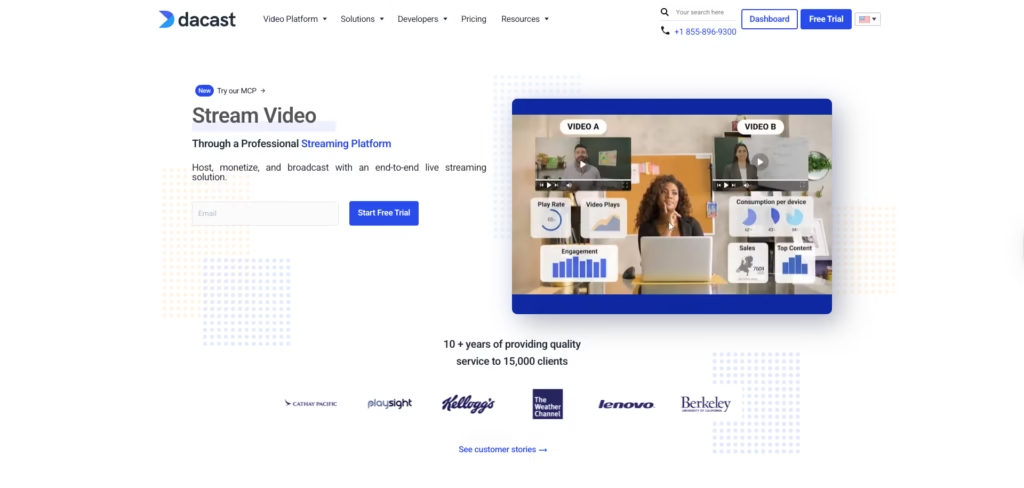
Dacast sits at the intersection of live streaming and on-demand video hosting. For fitness coaches who run a live group class schedule alongside a prerecorded content library, it covers both use cases on one platform.
Video delivery is CDN-backed with password protection and geo-restriction tools available across all plans. AES-128 encryption for video-on-demand content and full DRM are only available on the Scale plan ($165/month) and above, not on the entry Starter plan ($39/month).
The pricing model is based on bandwidth usage, which can work well for coaches with a steady, predictable audience but can feel unpredictable if your content goes through traffic spikes.
The dashboard is more complex than most, which adds a learning curve for coaches who prefer simple interfaces.
Plans start from $39 per month, with higher plans available for increased bandwidth.
Best for:
Fitness creators who mix regular live classes with an on-demand library and need a platform that handles both without switching tools.
Worth noting:
AES-128 encryption is solid but is not the same as full DRM. Dacast is better suited to access control and delivery quality than hard-line piracy prevention.
7. SproutVideo
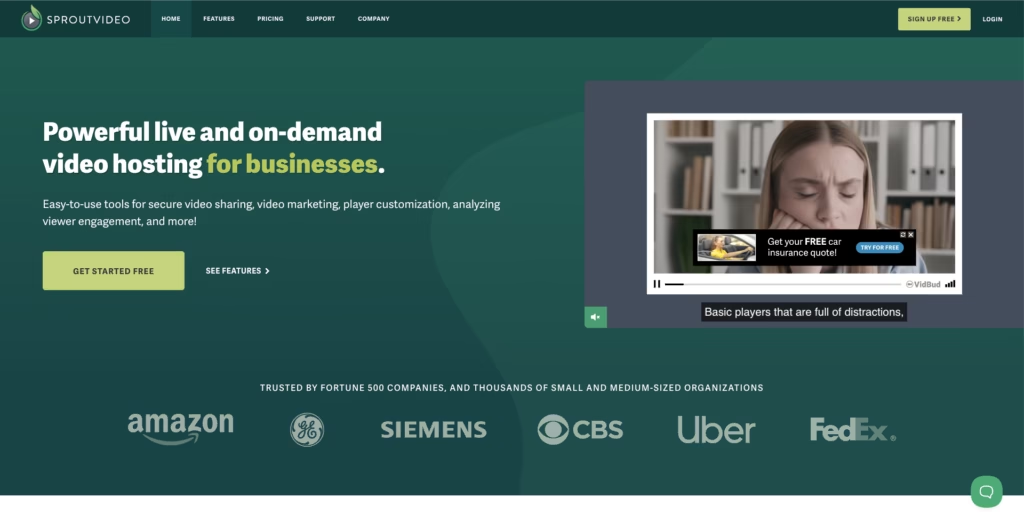
SproutVideo is a video hosting platform with strong access controls and an interface that does not require a technical background to navigate.
You can set viewer authentication requirements, restrict playback to specific domains, add video expiration dates, and track detailed engagement analytics.
For coaches who want more control than Vimeo Basic offers without the complexity of an enterprise platform, it fills that middle-ground well.
There is no DRM, and screen recording is not actively prevented. SproutVideo’s approach to security is access control plus accountability: it offers dynamic watermarking (displaying the viewer’s email, IP address, and session ID as an overlay) available from the Sprout plan ($35/month), which deters unauthorized sharing and helps trace any leaked recording back to the source account. It will not stop a determined viewer from capturing the video, but it does make that viewer identifiable.
Plans start at $10 per month, making it the most accessible platform in this list.
Best for:
Fitness coaches who want clean privacy controls, engagement analytics, and domain restrictions without paying for enterprise-level infrastructure.
Worth noting:
If your content is already circulating without permission, SproutVideo’s access controls alone will not stop it. Pair with a platform that includes DRM if that is a live concern.
Read More: 5 Best Enterprise Cybersecurity Solutions for Large Companies: EDR and XDR Compared
How to Pick the Right Video Hosting Platform for Your Fitness Business
Choosing the best video hosting for fitness trainers ultimately comes down to two things: how valuable your content is and what you are already experiencing.
If you sell premium-priced programs, have had content leaked, or are building a library you plan to monetize for years, choose a platform with DRM encryption. Gumlet and VdoCipher are the two strongest options at that level, with Gumlet adding multi-CDN delivery and marketing analytics on top of the protection stack.
If you want a complete, self-contained subscription business with a branded app, Uscreen is built for exactly that. If you already use Vimeo and have not experienced piracy, upgrading to a higher Vimeo tier is a reasonable step that maintains your existing workflow. And if you primarily use video for marketing and lead generation rather than paid content delivery, Wistia’s analytics tools make it genuinely useful.
Whatever platform you choose, look for DRM, watermarking, and a global CDN as the baseline. That combination is the minimum your paid content deserves.
If you want to see how the full protection stack works before committing to a plan, Gumlet’s free tier lets you test delivery quality and security controls without entering a credit card.
Frequently Asked Questions
1. Is YouTube private enough to protect paid fitness course videos?
No, a private YouTube link controls search visibility, not security. Any viewer can open browser developer tools to extract the direct file URL, use screen recording software to capture the content, or simply forward the link to someone else. For any content behind a paywall, private YouTube links are not a substitute for proper secure video hosting.
2. What does DRM mean for a fitness video creator?
DRM, or Digital Rights Management, is an encryption standard applied directly to the video stream. It means that even a viewer who has paid for legitimate access cannot copy the file, download it, or play it outside an authorized player. For fitness creators, it is the difference between a locked door and a door with a sign that says “do not enter.”
3. Do I need a separate video host if I already sell courses through Kajabi or Teachable?
Yes. Kajabi and Teachable handle transactions and course delivery well, but neither offers DRM encryption or dynamic watermarking. A platform like Gumlet or VdoCipher can be embedded directly inside your Kajabi or Teachable course via iFrame, keeping the student experience intact while adding stream-level protection underneath it.
4. Which video hosting platform is best for yoga and fitness instructors who sell content?
For instructors who sell premium content and want the full protection stack, Gumlet covers DRM, dynamic watermarking, adaptive streaming, and clean embedding into course platforms. VdoCipher is also a strong option if DRM enforcement is the single highest priority and the instructor does not need built-in marketing analytics. For coaches who want a branded subscription app, Uscreen is the most complete out-of-the-box option.