


The high-end AI video space has reached a boiling point. It used to be a game of “wait and see,” but now creators are faced with a genuine luxury problem. On one side, there is the cinematic, physics-defying realism of the latest OpenAI developments. On the other, Google’s massive creative ecosystem is pushing boundaries with deep integration and artistic control.
For anyone trying to produce high-quality content today, the friction isn’t about finding a tool that works — it’s about the paralyzing choice between two giants. Do you commit to the fluid, dream-like consistency of one, or the technical precision and vast library access of the other? This isn’t just about specs; it’s about how a creator feels when sitting in front of a prompt box at 2:00 AM, trying to bring a specific vision to life.
I. The Creative Tug-of-War: Why the Choice is Harder Than Ever
The debate between these two powerhouses isn’t a simple case of “A is better than B.” It’s more like choosing between a high-end digital cinema camera and a versatile, multi-lens mirrorless setup. Both can win an Oscar, but the workflow is entirely different.
- The Weight of Visual Identity Creators are finding that one model tends to “hallucinate” in a way that feels like high art, while the other leans toward hyper-realism. When working on a project that requires human-centric emotion, the warmth of the rendering matters more than the resolution. Conversely, for a sci-fi epic where physics must be bent without breaking, the computational power behind the scenes becomes the deciding factor.
- The Prompting Paradox There is a learning curve that no one talks about. Switching between models feels like trying to speak two different dialects of the same language. A prompt that yields a masterpiece in one environment might produce a distorted, unusable mess in another. This creates a “sunk cost” feeling—once a creator masters the “vibes” of one system, the thought of starting over with the competition feels like a step backward.
- The Reliability Gap We’ve all been there: a deadline is looming, and the “perfect” shot just won’t generate. Maybe the movement is too jittery, or the lighting feels flat. In these moments, the frustration isn’t with the technology itself, but with the lack of a “Plan B.” If one tool fails to understand the complexity of a 10-second tracking shot, the creator is often stuck, wishing they had an easy way to see how the other side would have handled the same prompt.
II. Breaking Down the Strengths of Sora 2 and Veo 3
To understand why the “all-in” approach is failing so many people, it is necessary to look at what these tools actually do when the render button is hit.
- The Magic of Sora 2 AI When people talk about Sora 2 AI, they are usually talking about its uncanny ability to maintain character consistency across complex environments. It understands that if a person walks behind a tree, they should look the same when they emerge on the other side. This temporal consistency is the “holy grail” of AI video. For filmmakers, this means fewer retakes and a more cohesive narrative flow. It excels in creating sprawling, atmospheric worlds that feel “lived-in.”
- Google’s Artistic Edge with Veo 3 On the flip side, the latest from Google leans heavily into creative intent. It feels more like a collaborator than a black-box generator. It offers tools that allow for more granular control over cinematic shots, such as pans, tilts, and zooms. If the goal is a commercial-grade product shot or a specific aesthetic that mirrors professional cinematography, this is often where creators find their rhythm.
- The Physics Factor There is a subtle difference in how these models handle the “real world.” Sora 2 Video has gained a reputation for its deep understanding of physical properties—how water splashes, how hair moves in the wind, and how shadows interact with uneven surfaces. Meanwhile, the competition often prioritizes vibrant color grading and sharp textures. Depending on the project—be it an abstract music video or a realistic documentary reenactment—one will always feel slightly “off” compared to the other.
III. The Friction of the Modern Workflow
The current state of AI video creation is fragmented. Most professional creators find themselves with twenty browser tabs open, juggling different subscriptions, and constantly downloading and uploading files between various tools.
- Subscription Fatigue Paying for multiple high-tier services is not just a financial burden; it’s a mental one. Keeping track of credits, different billing cycles, and varying usage limits takes time away from the actual creative process.
- The Compatibility Nightmare A video generated in one aspect ratio or frame rate might not easily match a clip from another. Trying to stitch together a coherent story using clips from two different engines often results in a “Frankenstein” video that looks disjointed and unprofessional.
- The Comparison Trap The biggest time-waster in 2026 is “the double-up.” A creator generates a prompt in one tool, isn’t quite happy, then manually copies and pastes that prompt into another tool to see if the result is better. This manual A/B testing is a workflow killer.
IV. Enter S2V: The Unified Response to Creator Choice
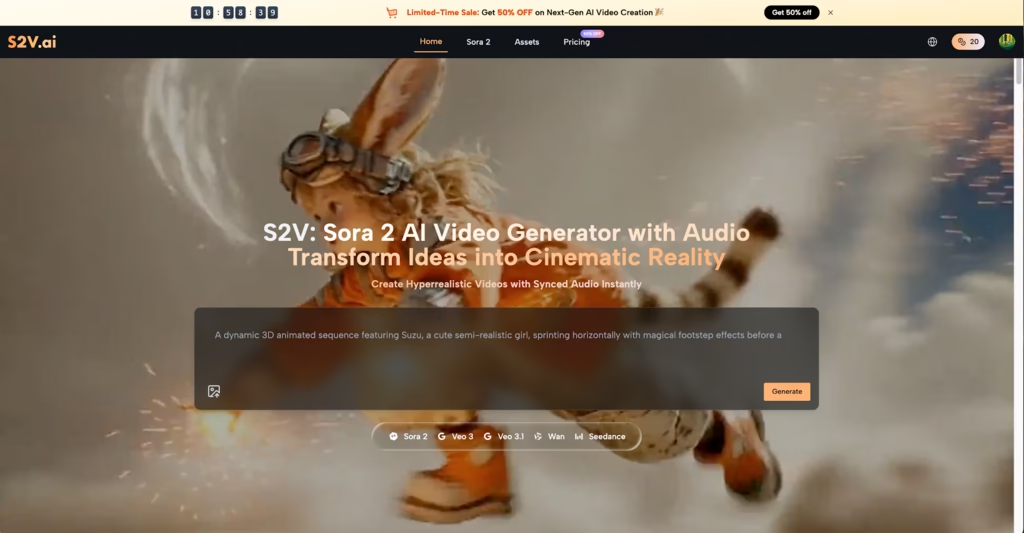
This is exactly where the industry has been heading. Instead of forcing creators to pick a side in the “model wars,” a more fluid way of working has emerged. This is the role of S2V. It isn’t just another tool added to the pile; it is the bridge that connects these powerful engines into a single, cohesive experience.
By using S2V, the decision-making process shifts from “Which subscription should I buy?” to “Which model is best for this specific shot?” It removes the walls between the world’s most advanced video generators, allowing the focus to return to storytelling.

V. Why S2V is the Natural Evolution for Video Creators
The genius of S2V lies in its simplicity. It recognizes that no single AI model is perfect for every scenario. By bringing everything under one roof, it solves the “choice paradox” that has been slowing down production cycles.
- Zero-Switching Efficiency The most immediate benefit is the elimination of the “tab-hopping” workflow. Within S2V, a creator can access the power of Sora 2 alongside other leading models without needing separate accounts or complex setups. It’s about having a single command center for high-end video production.
- A Unified Creative Dashboard Sora 2 serves as a primary pillar within the S2V ecosystem, but it isn’t the only one. The interface is designed to let the user compare outputs and choose the best render for their specific needs. If the character looks better in one but the background is more vibrant in another, having both options visible in one place is a game-changer for professional editors.
- Cost-Effective Scaling Instead of managing three or four different $30-per-month subscriptions, S2V provides a streamlined way to access these technologies. This is particularly vital for freelance creators and small agencies who need the best results but can’t justify the overhead of multiple enterprise-level accounts.
VI. Mastering the Art of the Prompt with S2V
One of the most powerful features of the Sora 2 Video Generator integration within the S2V system is how it handles user intent.
- Optimized Prompt Delivery Because S2V is built to talk to multiple models, it helps “translate” your creative ideas into the specific language each model understands best. This reduces the trial-and-error phase that usually eats up hours of creative time.
- Streamlined Management All your generations, regardless of which “engine” powered them, are stored and organized in one central library. This makes it incredibly easy to keep track of assets for a long-term project. You no longer have to remember if that one great shot of a mountain range was generated on Monday via one site or Tuesday via another.
- Future-Proofing Your Work The AI world moves fast. New models are released almost every month. By using S2V, you aren’t tethered to the fate of a single company. As new technologies emerge and existing ones like Sora 2 receive updates, they are integrated into the ecosystem, ensuring that your workflow remains at the cutting edge without you having to relearn a new system every time.

Read More: Best Off-Page SEO Agencies of 2026
VII. The Verdict: Flexibility Over Loyalty
In the end, the “Veo vs. Sora” debate is a distraction. The best creators aren’t loyal to a brand; they are loyal to their vision. The most successful projects are the ones where the tool disappears, leaving only the story behind.
By choosing a solution like S2V, you are essentially giving yourself an “all-access pass” to the best technology currently available. You get the physics and consistency of the OpenAI world, the artistic flair of Google’s research, and the convenience of a single, professional interface.
Stop worrying about which platform is winning the AI race. Instead, use a system that lets you win, no matter who is in the lead. The future of video isn’t about choosing one path—it’s about having the freedom to walk all of them at once.