
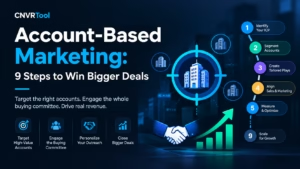
Account-based marketing is basically the opposite of how most teams chase business. And that is why it wins deals the spray-and-pray crowd never touches. You pick the exact companies you want, then go after them as if nothing else exists. For your revenue, nothing else really does.
And that is exactly what we are going to help you with. First, we will see what account-based marketing actually is and why it keeps winning. Then, 9 steps to build your own ABM strategy.
What Account-Based Marketing Actually Is And Why It Wins Deals
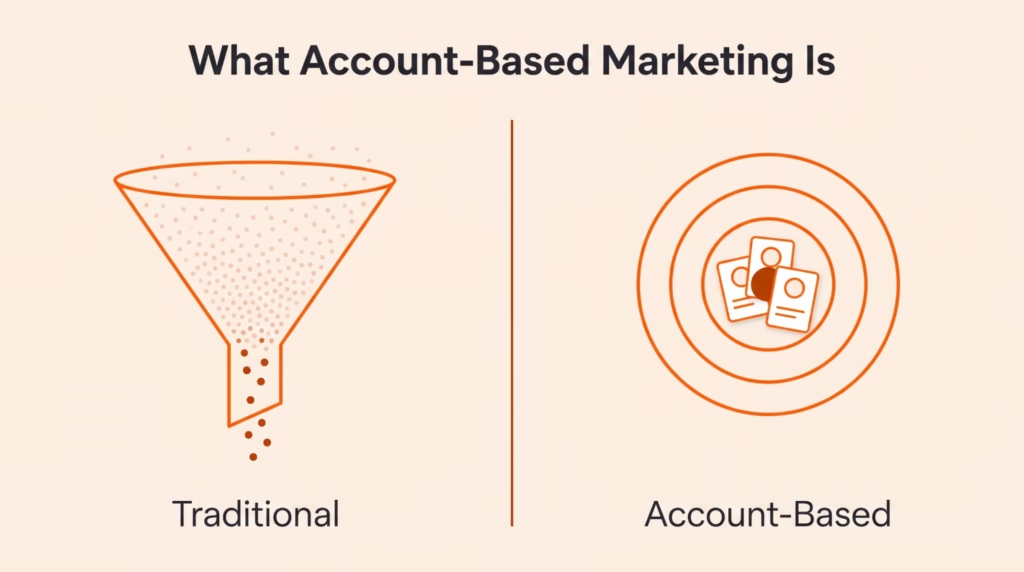
Normal lead generation works as a funnel. You drag in a huge crowd up top and cross your fingers that a few drop out the bottom as buyers. Account-based marketing (ABM) changes that completely. Unlike inbound marketing, you name the companies you want first, then market straight at them.
That one shift changes everything. You stop chasing headcount. You start chasing the specific logos you already know are worth real money. About 72% of B2B companies now do some version of this. So it is the default, not some fringe experiment. Many account-based marketing companies use this approach to focus resources on their highest-value prospects.
Account-based marketing works at three different scales, really.
- One-to-one is the full-custom treatment for your dream accounts.
- One-to-few is for little clusters that look alike.
- One-to-many is a broader targeted list.
| Approach | Traditional Lead Generation | Account-Based Marketing |
| Starting point | Cast wide for any lead | Pick named target accounts |
| Target | Individual leads | The whole buying committee |
| Message | One broad message | Tailored to each account |
| Success metric | Volume of leads | Account engagement and revenue |
| Best fit | High-volume low-price | High-value B2B deals |
Here’s how account-based marketing benefits.
1. Win Bigger Deals By Concentrating Your Firepower
When you quit spreading your efforts across a thousand randoms, every target actually gets your attention. That is the whole reason ABM deals come in bigger. You are going after companies that have real budget and a real need, not whoever happened to fill out a form. Bigger targets just write bigger checks.
2. Close Faster By Engaging The Whole Committee Early
A normal deal dies when someone you never even talked to shuts it down at the end. ABM pulls the whole buying group in from day one. Everybody hears from you early, so one surprise no doesn’t waste months of work. Shorter sales cycle, faster yes.
3. Waste Less Budget Because You Only Chase Real Fits
Broad campaigns waste cash chasing people who were never going to buy. ABM cuts that straight out. Every dollar goes only to key accounts that genuinely fit, so your budget works a lot harder. Less spray means less cash down the drain.
4. Build Relationships That Survive The Price Talk
Mass marketing stays shallow and forgettable. ABM is personal from the jump, so you have a real relationship before money ever comes up. Buyers stop beating you up on price when they trust you. And that trust is what makes a deal actually hold.
How To Create An Account-Based Marketing Strategy: 9 Easy-To-Follow Steps
Alright, time to actually build it. These 9 steps take you to an account-based marketing setup that runs on its own. Go in order if you can.
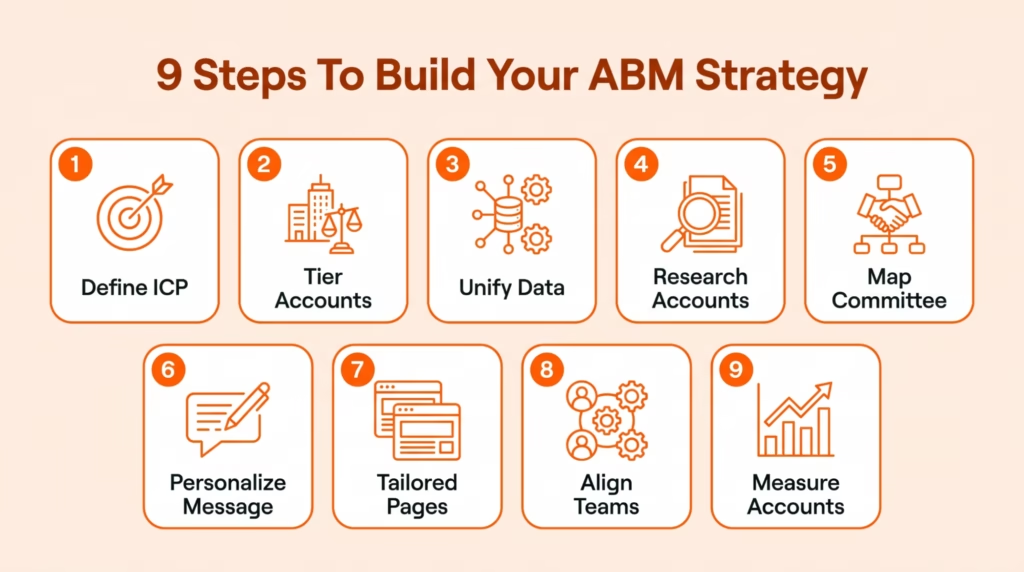
1. Define Your ICP And Pick The Accounts Worth Winning
Everything in ABM depends on picking the right accounts. Your ideal customer profile is the filter that decides who gets in. It is just the shared traits of the customers you close quickest and keep longest. Botch this, and every step after it is energy aimed at the wrong people.
And the payoff shows up fast, since 58% of B2B marketers watch their deal sizes grow once they focus like this. Get this list right, and everything downstream gets easier.
- List the traits of your 10 best existing accounts before anything else
- Score each prospective account against firmographic fit like revenue band and industry
- Cap the first list at 50 enterprise accounts, so your focus stays genuinely tight
- Cut any account that only one person on the team can justify
2. Split Your Accounts Into Tiers And Build A Play For Each
You don’t need to put the same effort into every account, so you group them by priority. Your top tier gets the full one-to-one treatment. The middle gets lighter one-to-few plays built for a group. The rest get a scaled one-to-many push. The whole idea is spending your energy where the money is – not rolling out the red carpet for a small account.
The issue is building a different strategy for each group without starting over each time. And it gets real in any market where people want completely different results from the same thing. One blanket message can’t cover that. You need a few distinct offers, each for a clearly different goal.
Health supplements are a great example of doing this well. To understand better, take this mushroom supplement range, which is never sold as one thing for everyone. Lion’s mane goes to the focus and memory crowd. Reishi is for the stress and sleep people. Cordyceps is aimed at energy and training.
Same shelf, totally different buyers. Shoving all of it under one broad wellness would be a mistake. Instead, each goal gets its own clear pitch. So a focus seeker and an energy seeker both see the one meant for them.
These account-based marketing examples show that a handful of sharp strategies for a handful of clear groups beats one bland message for the whole list. It pays off most when your target market splits into obvious clusters by size or need.
- Sort every ABM-targeted account into three tiers by revenue potential and strategic fit
- Give each high-value target account a fully custom one-to-one campaign and an owner
- Group lookalike mid-tier accounts so a single tailored path covers them all together
- Run the lowest tier through lighter automated programs to save your time
3. Unify Your Account Data Into One Reliable View
ABM stops working the second your data is scattered. One account is half in your CRM and half in your marketing tool. The rest is hidden in product logs. None of it agrees. So one rep sees a totally different customer than the next does. A single clean view of each account is the only thing that makes real personalization possible.
Actually getting all that together is a proper engineering job. For most teams, the account data is across so many systems that combining it into one view is genuinely hard. And a half-built data setup breaks your personalization later, right when you have started trusting it.
This is the kind of thing Microsoft Fabric was made for, since it folds every source into one lakehouse with one set of dashboards on top. But Fabric is a big platform, and standing it up well is its own challenge. The usual issues are broken pipelines and duplicate copies of the same data. On top of that, there is usually no real governance over who sees what.
That is the gap a Fabric data lakehouse consulting steps into. They clear out the duplicate data and wire OneLake up as the one true source. They can get the dashboards genuinely usable and also sort out the governance.
If your team can’t handle the Fabric build on its own, bringing in specialists can help you get everything working together without spending a year figuring it all out. Then your whole ABM runs on numbers everyone actually trusts.
- Pick one platform to act as the single source of truth for accounts
- Connect your CRM and marketing tools so records sync without manual work
- Match records by a shared account ID so duplicate profiles merge cleanly
- Build one dashboard that shows each account’s full engagement in one view
4. Research Each Account Until You Know Their World
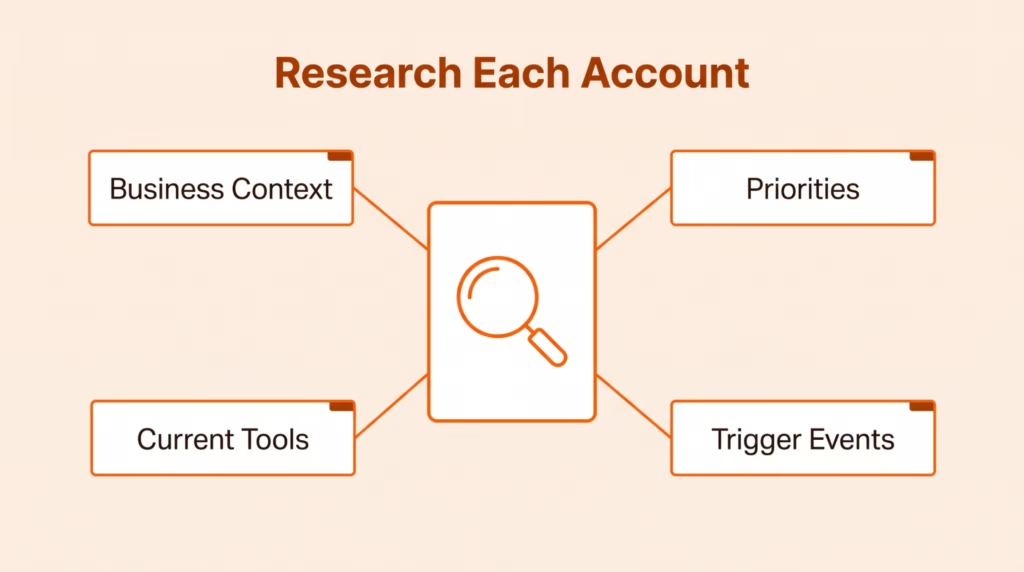
Your unified view tells you what happened. Research tells you why you should care. You need to understand their business strategy and the pressure they are under before you reach out.
Generic outreach dies on the spot here. The reps who win have clearly done the homework, and you can tell from their very first line.
This gets more important the higher the stakes get. In any field where one single engagement is huge and deeply personal, a copy-paste approach is worse than doing nothing. The other side can sense a script instantly. Get it wrong, and you actually upset the person you were trying to help.
High-stakes legal work shows it off perfectly. Someone like this wrongful death attorney in Atlanta, GA can’t run some generic script on a grieving family. Every single case depends on specifics, like exactly how the death happened and what evidence is still around. So the real work starts with digging, not pitching. They pull records and lock down evidence long before anyone talks strategy.
Here is their actual problem. No two cases look remotely alike, so a canned approach fails fast. They beat it by researching each situation from scratch, every time. And that is the exact muscle ABM success demands on your biggest accounts. Know the account cold before you open your mouth.
It matters most where deals are huge and personal, which describes every tier-one account on your list.
- Read the account’s latest earnings call or annual report for stated priorities
- Track trigger events like fresh funding rounds or a new leadership hire
- Map their current tools, so you know exactly what you would replace
- Note each account’s own words so your first outreach mirrors their language
5. Map The Buying Committee Behind Each Account
A company never actually signs anything. People do. And in B2B, that is almost never just one person. The typical deal now drags in about seven key decision-makers, each sweating a different thing. Miss one of them, and they can scupper the deal right at the finish line.
Mapping the committee just means knowing every name that touches the deal and what each one actually cares about. And it is never a single effort. People change roles, and new faces show up mid-deal. A map from month one is usually wrong by month 3. Keep it fresh as things move.
- List every role from your champion to your skeptic to the economic buyer
- Find the quiet skeptic early, often someone sitting in finance or security
- Learn what each stakeholder personally gains when the deal actually goes through
- Give your internal champion the marketing resources to sell you when you are absent
6. Personalize The Message To What Each Account Cares About
Personalized messaging is not a logo on a generic deck. It is leading with the one thing this account truly cares about and cutting everything else. You already know their priorities from your research. So now the message has to show it, or that homework was for nothing. The same offer gets framed differently for every account you touch.
It gets even trickier when the thing you sell does a dozen things at once. A product loaded with features is a trap if you try to show them all off. Every buyer only cares about the one or two that fix their specific problem. List everything and the whole message turns to mush. The skill is picking the single feature that matters most to the person reading.
Personal care products are a good example of this. A single product can have several features, each for a different buyer. Take the Brondell Swash 1400 bidet, for instance. It packs in a heated seat and a warm-water wash. It also has a dryer, a nightlight, and a hands-free remote. That is a seriously long feature list. But nobody weighs every one of those equally.
Somebody with mobility issues cares about that hands-free remote above all. An eco-minded buyer only cares about ditching paper. A luxury shopper just wants the heated seat and nothing else. Pitch all of it at once, and you connect with none of them.
So you lead with the one benefit that fits this exact buyer and park the rest. That is the entire ABM move. One account hears about security while the next hears about speed, from the identical product. It matters most whenever your offer is feature-heavy or sold into very different roles.
- Open every message with the account’s top priority, never with your product
- Reference something specific about their own business in the first two lines
- Swap the lead benefit depending on exactly which stakeholder you are addressing
- Cut any feature or claim this specific account will not care about
7. Reach Accounts With Tailored Pages And The Right Marketing Channels
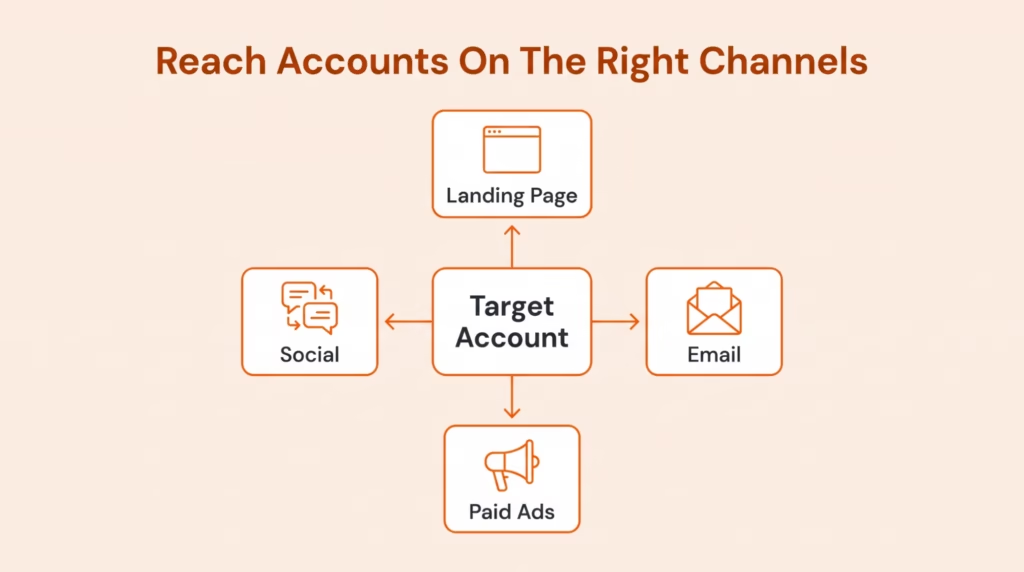
A personalized campaign needs somewhere personalized to go. Send a named account to your bland homepage, and you have undone all that work. Channels matter too, because every buyer spends time somewhere different.
The point of this step is delivery. The right words have to reach the account where they actually look. And the page they see has to look built for them. Account-specific landing pages do a lot of work here, since a page that calls out the account by name converts way better than a generic one. For high-value accounts, direct mail can add a personal touch alongside digital outreach.
Spinning those pages up quickly is its own skill, and a web crew like cnvrTool can build the tailored pages plus the SEO underneath. And when you stretch one asset across channels, the right editing tools keep it looking consistent everywhere.
- Build a landing page for each tier-one account that names their problem
- Meet each buyer on whichever channel they already check every single day
- Coordinate your email and ad touches so they reinforce one single message
- Retarget known accounts with display ads matching the exact page they checked
8. Align Sales And Marketing Teams Around One Shared Account List
ABM falls apart the moment marketing and sales teams run their own separate lists. The marketing team warms up one batch of accounts while the sales team chases a totally different batch. You get wasted sales efforts and a lot of finger-pointing.
This matters more in ABM than in pretty much any other model. With one shared account, ABM marketers can’t claim a win that sales never even followed up on. The account itself becomes the one thing both teams answer to. That is what finally kills the usual blame game.
- Agree on one shared list of target accounts both teams fully commit to
- Write one shared definition of a sales-ready account to end the arguments
- Hold a weekly meeting on named accounts, never on vague pipeline numbers
- Tie both teams to the same revenue goal, not to separate vanity metrics
9. Measure At The Account Level And Refine Relentlessly
Normal marketing metrics will straight up lie to you in ABM. A thousand clicks mean nothing if your actual target accounts never budged. You measure it differently here, by how engaged each named account is and how much pipeline it throws off
The numbers show you which accounts are heating up and which strategies are doing the work. Then you feed that back in and sharpen.
- Track engagement per account, not just total clicks across the whole marketing program
- Watch how many buying-committee members inside each account are actively engaging now
- Measure the pipeline and revenue created from your target account list specifically
- Drop any play that shows no movement after a fair, defined window
Account-Based Marketing Mistakes That Lose Deals + How To Fix Them
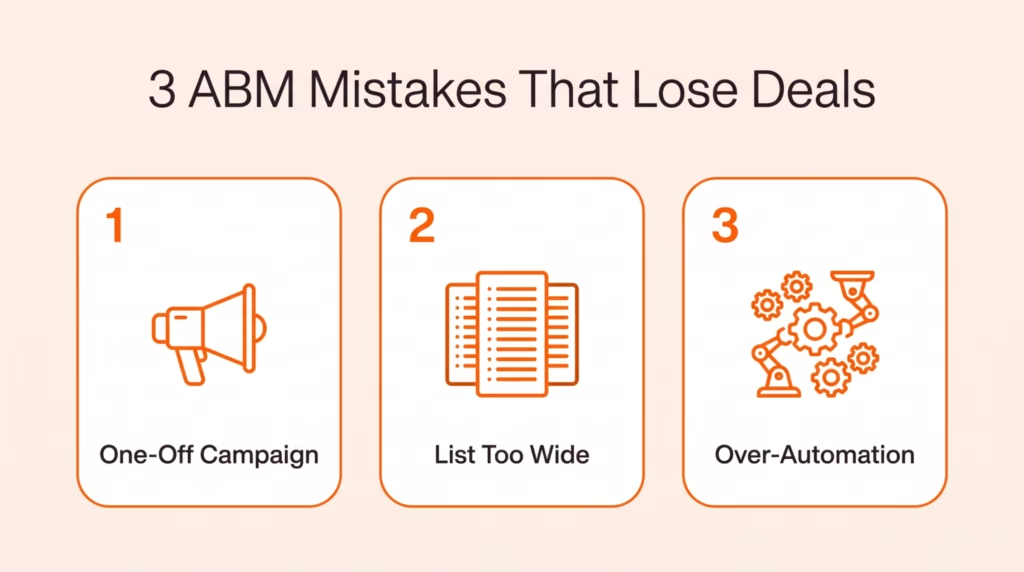
Even the sharpest account-based marketing tactics can come undone over time. These three mistakes do the most damage.
1. Treating ABM As A One-Off Campaign Instead Of A Program
The biggest trap is running ABM like a campaign with an end date. You hammer some accounts for a quarter and pick up a couple of wins. Then you move on. But accounts change, and buying windows crack open months later. Switch the effort off, and the account goes cold right before it was ready. You walk away one step from the close.
How to Fix: Run ABM as an always-on program with a real owner and a budget that never expires. Keep nurturing your target accounts even when they are nowhere near ready to buy. The whole goal is being the obvious pick the second their need turns real.
2. Casting The Account List Too Wide To Truly Personalize
Plenty of teams call it ABM but point it at 500 accounts. That is just broad marketing with a fancy new label. With a list that huge, real personalization is flat out impossible. So every account gets the same shallow little touch. You throw away the one edge ABM ever had over spray-and-pray.
How to Fix: Start way smaller than feels comfortable, maybe 20 to 50 accounts. Go genuinely deep on those before you tack on a single extra one. A small list done right beats a big list done lazily every time.
3. Leaning So Hard On Account-Based Marketing Automation That It Stops Feeling Personal
Running ABM marketing at scale really tempts you to automate the whole thing. Templates and sequences do all the talking, and the personal touch that made ABM work just drains away. The account ends up getting mail-merged notes to look personal.
Buyers notice that instantly, and a fake-personal message is worse than an honest generic one. You poison the exact trust you were trying to build.
How to Fix: Automate the boring admin, never the actual message. Let the account-based marketing tools handle scheduling and data, but keep a human writing anything a high-value account will read. Save your deep personalization for the accounts that genuinely earn the time.
Conclusion
If you walk away with one thing, make it this. Account-based marketing rewards going deep, not going wide. Start with a small list of accounts you genuinely want and get obsessive about them. Don’t try to chase everyone on day one. The teams pulling ahead are not doing everything at half effort. They picked a few logos early and refused to let go.
That is the part we actually care about at cnvrTool. We build the websites and landing pages and the SEO behind them, so your account outreach has somewhere strong to go. Nail the targeting and the delivery together, and you stop leaking good accounts. If you want your ABM campaigns pointed at pages built to convert, get in touch with us.