
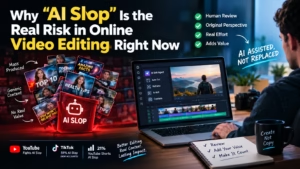
“Slop” was Merriam-Webster’s 2025 Word of the Year, defined simply as low-quality digital content produced in bulk using AI. By 2026, it’s not a niche complaint anymore. YouTube CEO Neal Mohan used the term directly in his 2026 letter to creators while discussing low-quality AI content and synthetic media, and a June 2026 study by Kapwing that manually reviewed more than 10,700 videos found that 59% of TikTok videos served to new accounts qualified as AI slop, compared to 21% on YouTube Shorts.
That’s not a fringe problem. It’s the actual environment every video creator is now publishing into, and it changes what “using AI to edit faster” needs to mean if you don’t want your content lumped in with the flood.
This article breaks down what AI slop actually is, why it happens, and how to keep using AI in your editing workflow without your videos sliding into the same category the platforms are now actively demonetizing. By the end, you’ll have a clear, practical line between AI-assisted editing that holds up and AI-generated content that doesn’t.
What “AI Slop” Actually Means
The label gets thrown around loosely, so it’s worth being precise. AI slop isn’t “any video that used AI.” It’s content that is mass-produced, generic, and optimized purely for output rather than value, made because it was cheap to generate, not because it needed to exist.
The distinction that actually matters:
- Human-directed content made with AI tools isn’t slop, even if a model generated the voiceover, the B-roll, or the captions
- Lazy, hand-made content can absolutely be slop too, the presence of AI isn’t the deciding factor
- What separates the two is originality and effort, not which tools touched the footage
This matters because the instinct to avoid slop by avoiding AI entirely is the wrong lesson. The problem was never the technology, it’s mass production with no point of view behind it.
How Big Is the Problem, Actually
The numbers are no longer anecdotal. Kapwing’s 2026 review found AI slop rates varied sharply by category, hitting 57% in kids’ content, 35% in science and education, and 34% in both health and history content on the platforms studied.
Platforms have responded accordingly. YouTube’s updated monetization policy now splits “inauthentic content” into three categories that can’t earn ad revenue:
- Generic, repetitive, or template-based content
- Off-putting or distressing content
- AI personas used to discuss sensitive topics like health or finance
That last category is a direct response to a real pattern: synthetic hosts delivering generic advice on topics where trust and accuracy actually matter. The platforms aren’t cracking down on AI use, they’re cracking down on the absence of a real person taking responsibility for what’s being said.
Check it: Best AI Video Editors for Repurposing Long-Form Content
Why Fully-Automated, One-Prompt Editing Tends to Produce Slop
The mechanism is straightforward once you see it. A workflow where you type one prompt and get back a finished, locked video has no point where a human actually reviews the result before it ships. Nothing gets questioned, refined, or caught before it’s public.
That’s structurally different from AI-assisted editing where a person:
- Reviews what the AI produced before publishing
- Can see and adjust every individual change, not just approve a black-box output
- Makes the actual creative calls, tone, framing, what’s worth including, rather than accepting whatever came out first
The tools aren’t the problem. A workflow with no review step, applied at scale because it’s nearly free to run, is what produces a feed full of content that looks fine for three seconds and means nothing by the end.
What This Looks Like in an Online Video Editor That Gets It Right
This is where the difference between editing tools actually shows up. Invideo’s online video editor is built around agents that execute editing tasks, cutting silences, reframing for a platform, generating a missing shot, but every change lands on a real, visible timeline you can inspect, adjust, or reject before anything is exported. Nothing ships automatically just because an agent produced it, that’s a deliberate design choice in how invideo editor handles agent-driven work.
That structure matters more than the specific features:
- You’re directing the edit, an agent is executing it, not the reverse
- Every cut, caption, and generated clip stays editable, not locked into a final render you either accept or discard entirely
- The judgment calls, what’s worth keeping, what the tone should be, still sit with the person making the video
That’s the version of “AI-assisted” that survives the platforms’ updated policies and the audience’s growing slop fatigue, because the human accountability the crackdown is actually targeting never left the process.
Check Out: 10 Best Video Editing Software for Beginners in 2026
A Quick Self-Check: Signs Your Content Might Be Sliding Toward Slop
A few honest questions worth asking before you publish:
- Did a person actually review the final cut, or did it go out exactly as the AI produced it?
- Could you explain, in your own words, why this specific video needed to exist?
- Is there a real point of view in it, or could the same script have been generated for any creator in your niche?
- Are you publishing more because you have something to say, or because generating another video is nearly free?
- Would you be comfortable putting your name on every claim made in it, especially in topics like health, finance, or advice content?
None of these questions are about whether AI touched the video. They’re about whether a person is still accountable for what it says.
What This Means Going Forward
The platforms aren’t going to loosen up on this, if anything, monetization policy is trending toward more scrutiny, not less, as generation gets cheaper and faster. At the same time, audiences are getting measurably better at spotting content that looks fine but says nothing, which means the actual competitive advantage in 2026 isn’t using AI faster than everyone else. It’s being one of the creators whose AI-assisted work still has an obvious, accountable human behind it.
Key Takeaways
- AI slop is defined by mass production without originality or effort, not by whether AI was involved at all
- A June 2026 study found AI slop made up 59% of TikTok videos shown to new accounts, versus 21% on YouTube Shorts, with the highest rates in kids’, science, health, and history content
- YouTube’s updated monetization policy now explicitly excludes generic, template-based, and unaccountable AI-persona content from earning ad revenue
- The real risk factor is a workflow with no human review step before publishing, not the presence of AI tools themselves
- Editors where every AI-driven change lands on a visible, editable timeline keep a human in the loop by design, rather than shipping a locked, one-shot output
- The competitive edge going forward isn’t speed alone, it’s still being clearly, accountably human behind AI-assisted work
FAQs
What exactly counts as “AI slop”?
Content that’s mass-produced, generic, and optimized for output rather than value, made because it was cheap to generate rather than because it needed to exist. The label tracks effort and originality, not whether a machine was involved in making it.
Does using AI to edit my videos automatically make them slop?
No. Human-directed content made with AI tools isn’t slop, even when a model generated part of it. The deciding factor is whether a person actually reviewed, shaped, and stands behind the result, not which tools touched the footage.
Why is YouTube cracking down on AI-generated content now?
YouTube’s updated monetization policy targets three specific categories: generic or template-based content, off-putting or distressing content, and AI personas discussing sensitive topics like health or finance without real accountability behind them. It’s a response to real, measured volume, not a blanket ban on AI use.
How can I tell if my own content is drifting into slop territory?
Ask whether a person actually reviewed the final version before it published, whether you could explain in your own words why the video needed to exist, and whether you’d put your name behind every claim in it. If the honest answer to any of those is no, that’s worth addressing before you publish.
Is it still safe to use AI editing tools in 2026?
Yes, the platforms and the data both point to workflow, not tool use, as the actual problem. Tools where AI executes tasks on a visible, editable timeline, rather than producing a locked, unreviewed final output, keep the human accountability that separates AI-assisted work from slop.
What’s the single biggest difference between AI-assisted editing and AI slop?
Whether a human reviewed and stands behind the result before it published. Everything else, which tools were used, how much was automated, how fast it was made, is secondary to that one distinction.
Conclusion
The AI slop conversation isn’t really about AI at all, it’s about whether anyone was actually paying attention before a video went out. As the tools get faster and cheaper to run, that question is only going to matter more, not less. So before your next upload: if a viewer asked you why this specific video needed to exist, what would you actually tell them?
Author : Steve Smith is a technology and digital content writer who covers practical software, online tools, and emerging technologies. He focuses on creating clear, useful guides that help beginners and everyday users understand software, choose the right tools, and get more from their digital workflow. Steve’s work combines hands-on research with straightforward explanations, making complex technology easier to understand and use.